
REVIEW · SANTO DOMINGO CITY TOURS
Santo Domingo Small Group Walking Tour: Beer and Specialty Coffee
Catedral and coffee, on one smart stroll. I love the small-group feel, with a guided walk through Santo Domingo’s UNESCO Zona Colonial, and I love that you get a specialty coffee or tea plus local beer tasting and Mama Juana along the way. If you like seeing big-name landmarks without the stress of figuring out every turn, this is built for you.
One thing to keep in mind is that access can shift. The Royal Houses museum may be closed on Mondays, some major sights like the Alcázar de Colón and the Pantheon can be exterior-only during renovations, and the cathedral has a strict dress code (shoulders and knees covered).
Key highlights to look forward to
- Coffee, beer, and Mama Juana included: you do not just pass cafés, you stop for tastings.
- UNESCO Zona Colonial in a tight loop: Parque Colón, Catedral Primada, Calle Las Damas, and more.
- A guide who keeps it personal: this is capped at 12 people and stays bilingual (English and Spanish).
- One included museum and cathedral entry: Museum of the Royal Houses and the Catedral are part of the value.
- Outdoor views when renovations hit: Alcázar de Colón and the Pantheon may be seen from the outside right now.
Other trips west to the capital

Why this Zona Colonial beer and coffee walk works so well
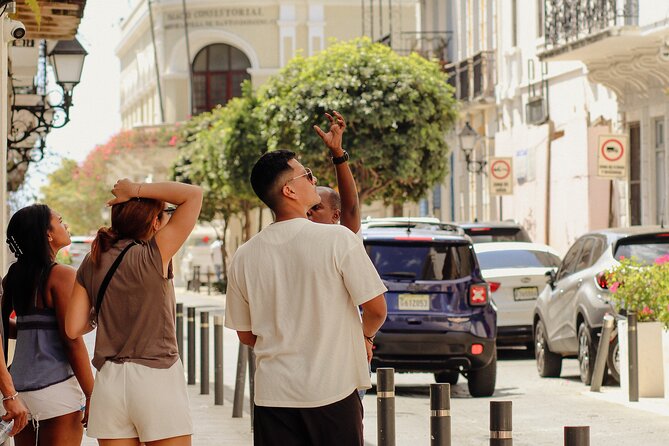
Santo Domingo’s Colonial Zone can feel like a lot fast. You have cobblestone streets, church façades at every angle, and squares that get busy with foot traffic and street life. This tour is designed to keep you moving at a human pace while still packing in the big, recognizable stops.
The standout part for me is the mix. You are not doing a museum crawl where you just look and move on. You start with a specialty drink, you get a beer tasting, and you even try Mama Juana, the Dominican spiced rum that shows up on menus everywhere in one form or another. It gives the tour texture, and it helps you slow down at the moments that matter.
Small group matters too. With a maximum of 12 travelers, you are more likely to get real back-and-forth, not just a headset lecture. And since the guide shares information in both English and Spanish, you will get more context even if your Spanish is only “hello and thank you.”
Price and what is truly included for $59
At $59 per person for about 2 hours, the deal is strongest because the tour bundles several things most people end up paying for separately. You get guided entry for the Catedral Primada de América and admission to the Museo de las Casas Reales (Museum of the Royal Houses). You also get one specialty drink you can choose from (latte, cappuccino, tea, or hot chocolate), plus local beer tasting, a bottled water, and a Mama Juana tasting.
Even without knowing the exact ticket prices in advance, you can usually tell when a walking tour is just selling a guide versus selling a package. Here, you are paying for a guide and planned access, not only for “stand near this building.” It is one of the best ways to experience Colonial Zone highlights if you want to keep your day simple.
The other value piece is time. The tour gives you a structured route through the heart of the district, so you can spend less time re-checking maps and more time understanding what you are seeing.
Starting at Casa Barista and getting oriented on Calle El Conde
Your tour starts back at Casa Barista & Co.C., Arzobispo Meriño 268 in Santo Domingo. From the first stretch, you get the feeling of walking into the Colonial Zone’s daily rhythm: storefronts, cafés, and small pockets of green space as the neighborhood opens up.
A key first stop is along Calle El Conde, the pedestrian street lined with shops, art, and cafés. This is where you get your bearings fast. If you have only a few hours in the city, using Calle El Conde as the “warm up” makes sense because it helps you understand how locals move through the area, not just tourists.
You also get your first included drink here. If you want a quick caffeine reset or something warmer like tea or hot chocolate, this is your moment. It is an easy start and a good way to settle in before you step into the heavier historic sites.
Parque Colón: the Columbus statue and the naming story you can see
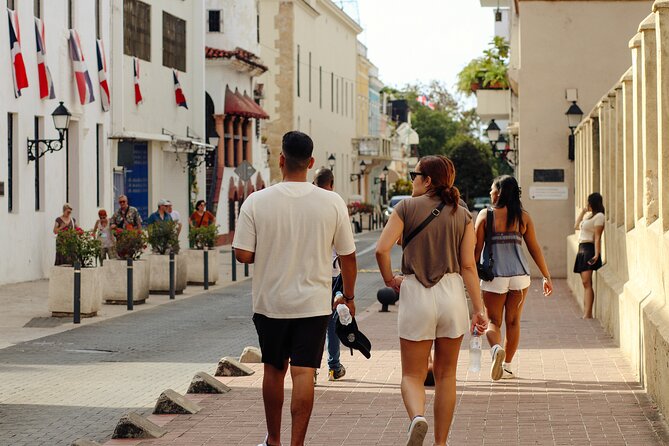
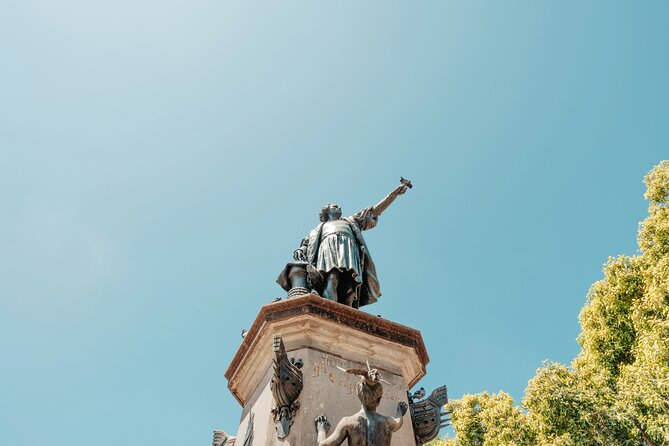
You begin the core monument phase at Parque Colón, the central square of Santo Domingo’s historic district. The headline detail is the statue of Christopher Columbus and the fact that the square took on the Columbus name in 1887.
What I like about starting here is that it gives you a reference point. When you later see churches, fortifications, and royal-era buildings, you can connect them to the same early colonial storyline. The park itself is also a natural pause. Even if your feet are moving, your brain gets a moment to organize the “where am I?” question into “how does this place relate to the city’s origin story?”
Admission is free here, so you are not waiting on tickets. It keeps the morning flowing.
More estates pouring inland
- Zona Colonial: Recorrido Histórico con Chocolate y Mamajuana
★ 4.8 · 76 reviews - Santo Domingo Small Group Walking Tour: Beer and Specialty Coffee
★ 5.0 · 55 reviews - Dominican Republic: 3-Hour Chocolate Lovers Tour
★ 4.9 · 4 reviews
Catedral Primada de América: the oldest church in the Americas, with real dress rules
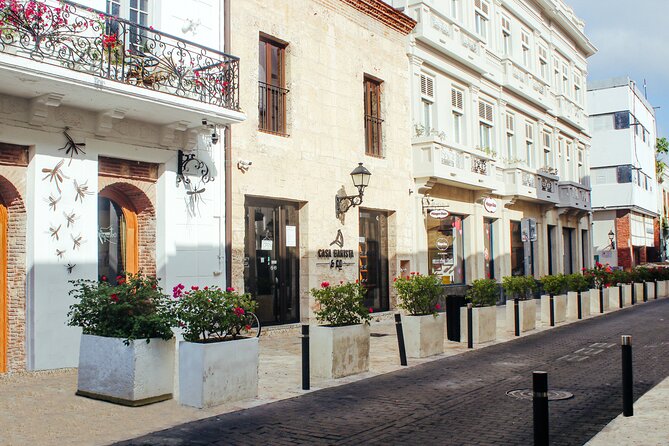
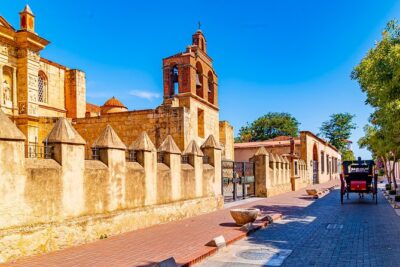
The Catedral Primada de las Américas de Santo Domingo is the kind of place that changes how you look at a skyline. It is dedicated to St. Mary of the Incarnation and is considered the first and oldest in the Americas. Construction began in 1504 and took 46 years, so you are not just looking at an old building, you are looking at a long-building project that shaped the city.
Entry is included, which is a major part of the value. But plan around the dress code. Visitors must wear clothing that covers their shoulders and knees. If you show up in shorts and a sleeveless top, you might have a problem getting inside, so bring a light layer if you can.
You will likely spend about 20 minutes here. That is enough time to notice architecture details without feeling trapped for an entire church service. One more practical note: the cathedral may be closed on Mondays, so your guide may adjust what you can enter depending on the day.
Calle Las Damas: the first paved road in the Americas
Calle Las Damas is one of those street names that feels like a story before you even walk it. It is known as the street of the ladies, and it also holds a big historical brag: it was the first paved road in the Americas. The architecture dates back to the 16th century, and the street is narrow, which means the buildings feel close and personal.
The tour gives you time here (about 15 minutes). In that window, I think the best move is to slow down and look upward. The street’s power is in how the colonial buildings create a tight corridor, and many of the structures along the way are now used as museums or embassies. Even if you do not go inside everything, you still get a sense of how the street evolved from early infrastructure to today’s institutional uses.
Calle Las Damas also connects smoothly to the later Colonial Zone stops. It acts like a spine for the walk, so when you reach squares and palaces, the geography already feels familiar.
Museo de las Casas Reales and the Reloj de Sol
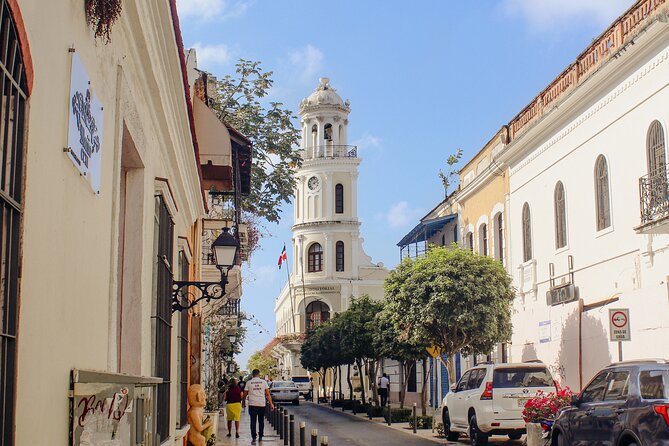
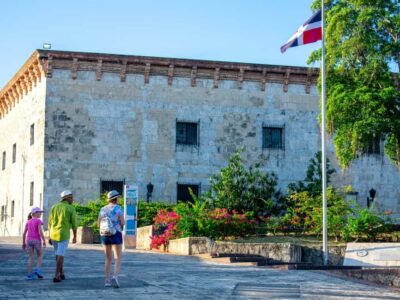
Right after the “street of ladies” you move toward the world of Spanish colonial governance. The Museo de las Casas Reales (Museum of the Royal Houses) is included, and it is one of the most meaningful places on the walk because it connects buildings to power.
This museum was the Spanish Governor’s Royal Court in the 16th century. Inside, you get an overview of Dominican Republic history from colonialism through independence from Spain in 1821. Even if you are not a formal museum person, this helps you interpret the landmarks you have been walking past.
Outside, you also see the Reloj de Sol, the stone clock about 12 feet tall, located in front of the Royal Houses Museum since 1753. It was used by government officials to keep track of time. That detail sounds small, but it adds real texture. You start noticing how government, daily life, and architecture all tied together in the same space.
A couple of timing notes matter. The Royal Houses museum is under maintenance, so you may see work being done. And it is closed on Mondays, so on those days you might not get the museum interior stop even if the guide still covers the story out in the street.
Beer tasting, specialty coffee, and Mama Juana: how the food stops add context
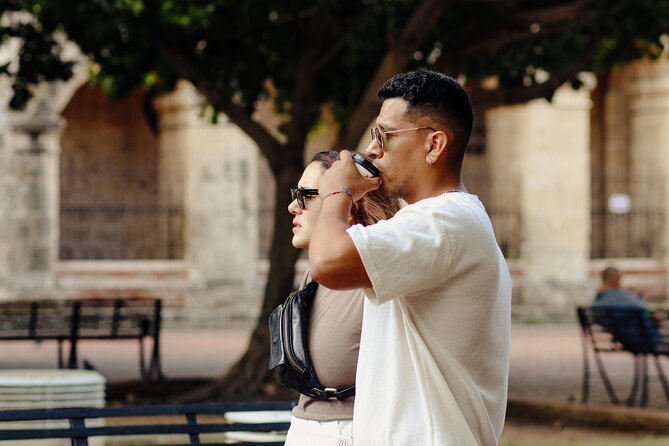
This tour is not just “history with snacks.” The drink and tasting portion is part of the pace. You choose one specialty drink such as latte, cappuccino, tea, or hot chocolate. Then you move into a local beer tasting, with a bottled water included.
Finally, you try Mama Juana. This is Dominican spiced rum, and it gives the Colonial Zone story a flavor angle. You start connecting Spanish colonial roots and later local identity through a product people actually share and drink today.
For me, the best part is that these tastings break up the walking. Churches and palaces can turn your brain into a blur after a while. Having a beverage stop gives you a natural reset, and it also encourages you to slow down and ask questions of your guide when you are in a comfortable setting.
You may also get a chance to purchase souvenirs. The tour passes through areas known for shops along the way, so you are not left at the mercy of finding the one store that is open.
Ozama Fortress and the old idea of defense
The Ozama Fortress is an early 16th-century Spanish-built structure and is often described as the first permanent military structure in the Americas. If you have only ever thought of colonial cities as places of worship and government, this adds balance. Fortification is a different lens on how power worked.
You will not be spending a long indoor visit here. The tour is built to keep moving, and the fortress is part of what you learn as you walk past or stop briefly to take in the form. Think of it as your history “anchor” for the beginning of Spanish colonization and the reality that cities had to be defensible.
This stop also ties into the overall architecture theme. Once you notice defensive design choices, you start seeing them again when you look at later palaces and church compounds.
Pantheon of the Fatherland and Alcázar de Colón, currently seen from outside
Two of the most famous names on the route are the Pantheon of the Fatherland and Alcázar de Colón. These are both currently closed for renovations, so you will see them from the outside.
That sounds like a disappointment on paper, but in practice it can still be worthwhile, especially if you care about context. From the exterior, you can recognize why these buildings are so important, and your guide can connect the architecture and role in Dominican identity even without entry.
The Pantheon of the Fatherland is a national mausoleum. It is a Jesuit church from the 18th century, and it houses the remains of Dominican heroes such as Gregorio Luperón, Salomé Ureña, and José. You can also expect a presidential honor guard during the visit, which adds a ceremonial feel even if you cannot go inside.
Alcázar de Colón is described as the first European fortified palace in the Americas, constructed between 1510 and 1514, mostly in Gothic and Renaissance style. Even with renovations, it is the kind of stop that makes you look twice because it does not feel like a simple townhouse. It feels like a statement.
Ruinas de San Francisco and Hospital Saint Nicholas of Bari
The tour also includes two stops built around ruins, which is where the story gets more human. The Ruinas de San Francisco are the rustic walled ruins of what was the first Franciscan monastery in the New World. It has a complicated history, and you will learn how it ended up in ruins. Seeing it from outside makes the “before and after” concept easier to grasp.
Then you have Hospital Saint Nicholas of Bari. Built between 1503 and 1508 under Governor Nicolás de Ovando, it is considered the oldest hospital in the Americas and served as a model for others. Today it lies in ruins on the north side of the area. Like the monastery, you are not just looking at what a place looked like, you are looking at how early institutions were built and how time reshapes everything.
These ruin stops are free entry. They also make the tour feel more complete because not every landmark in a historic district is preserved in perfect condition.
Practical tips for a smoother 2-hour walk
A few details make a noticeable difference.
First, dress for church entry. The cathedral requires shoulders and knees covered. If you are traveling in warm weather, bring a light scarf or layer you can put on and remove quickly.
Second, expect a guided walk with brief time at each site. The tour is about 2 hours, so stops are short and purposeful. That can be perfect if you want highlights without overwhelm, but it is not the tour for people who want to linger for long photo sessions inside every building.
Third, plan for schedule shifts. Some sights can be closed or exterior-only due to renovations, and museums are closed on Mondays. If your travel dates land on a day when access is reduced, you might get less time at certain interiors and more time on streets and viewpoints.
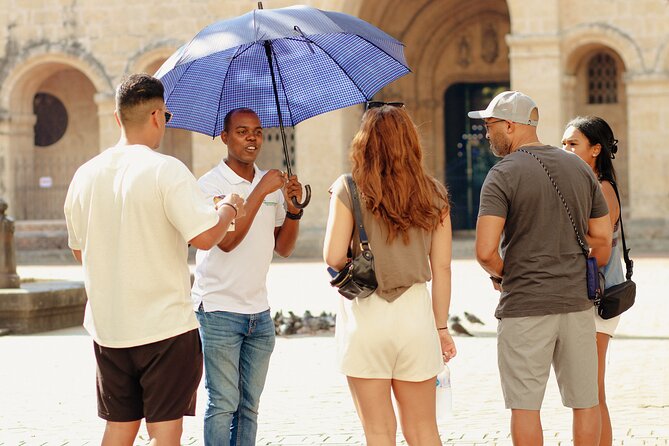
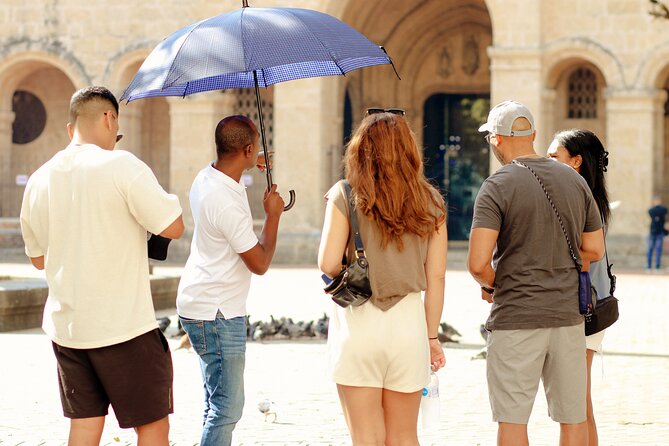
Finally, if the weather turns, the experience may still continue. One small hint from past groups: guides sometimes bring umbrellas when it is cloudy, so if rain looks possible, I would still pack your own light cover.
Who this Santo Domingo tour is best for
This tour is a smart fit if you want a structured introduction to Santo Domingo’s Colonial Zone and you also care about food and drink. It works especially well for first-timers who feel overwhelmed by how much there is to see. You will get the key monuments, plus the beverage tastings that help the city feel lived-in rather than frozen behind glass.
It also suits people who like walking but do not want a half-day hike. About 2 hours on foot is realistic for most visitors, and the pace stays manageable because the group is small and capped at 12.
If you are the type who wants to spend long hours inside museums and churches, you might find the timing a bit tight. In that case, pair this with a longer independent visit to whichever interior matters most to you.
Should you book this Beer and Specialty Coffee walking tour?
If you want a high-value, short, guided loop through Santo Domingo’s UNESCO heart with coffee, beer, and Mama Juana tastings, I think you should book it. The included admissions to the cathedral and the Museum of the Royal Houses, plus the drink program, make it a practical way to spend a couple of hours in the Colonial Zone without scrambling for tickets or guessing what is worth your time.
I would only hesitate if you are traveling on a Monday or you are relying on specific interior access, because the Royal Houses museum can be closed and major sights like the Alcázar and the Pantheon may be exterior-only during renovations. If you can be flexible, though, this is the kind of tour that helps you understand the city quickly, then enjoy the rest of your day on your own terms.
FAQ
How long is the Santo Domingo Small Group Walking Tour: Beer and Specialty Coffee?
It lasts about 2 hours.
How much does the tour cost?
The price is $59.00 per person.
What is included in the tour?
You get admission to the Museum of the Royal Houses and the Cathedral of Santa María la Menor (if open), 1 specialty drink choice (latte, cappuccino, tea, or hot chocolate), a local beer tasting, Mama Juana tasting, and one bottled water, plus an expert bilingual guide.
Where do we meet, and where does the tour end?
Meet at Casa Barista & Co.C., Arzobispo Meriño 268, Santo Domingo 10210, Dominican Republic. The tour ends back at the meeting point.
Is it really a small group?
Yes. The maximum group size is 12 travelers.
Is the tour bilingual?
Yes. The tour is bilingual, with information shared in English and Spanish.
What should I wear to the cathedral?
Visitors must wear clothing that covers their shoulders and knees.
Are any museums or landmarks closed during the tour?
Yes. The Royal Houses museum is under maintenance and may show work. Museums are closed on Mondays, and the Alcazar de Colón and the Pantheon may be closed for renovations, so you may see them from the outside.
Do I get a mobile ticket?
Yes. The tour uses a mobile ticket.
What if it rains or I need to cancel?
The experience requires good weather. If it is canceled due to poor weather, you will be offered a different date or a full refund. Free cancellation is available up to 24 hours in advance for a full refund.
More Tour Reviews in Santo Domingo
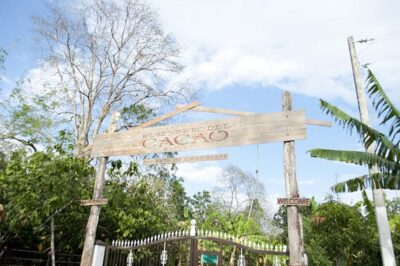
Rum, Cacao and Coffee Near Santo Domingo

The Capital, Three Hours West

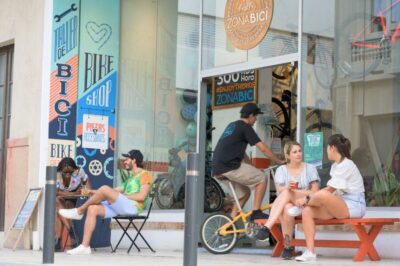
Newly reviewed near Santo Domingo
- Los Haitises Park & Cayo Levantado: Samaná unforgettable Journey★ 4.0 · 8 reviews
- Full-day at Catalina Island from Santo Domingo with optional snorkeling included★ 3.0 · 8 reviews
- Hiking the 27 Waterfalls of Damajagua Tour from Santo Domingo★ 4.5 · 8 reviews
- Punta Cana: Experience the essence of Santo Domingo with lunch and the Colonial Zone★ 3.9 · 9 reviews
- Santo Domingo Top: Colonial Zone Boat Ride Adventure★ 5.0 · 9 reviews
- Hiking Tabernacle Thundering Waterfall★ 5.0 · 9 reviews
Santo Domingo City Tours, compared.
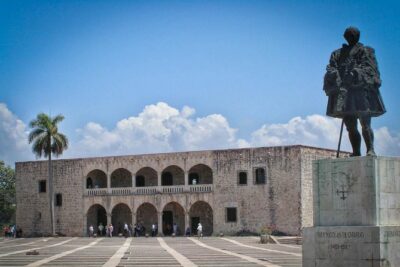 ★ 4.5Full-Day Santo Domingo City Tour from Punta CanaFrom $954,500 reviews
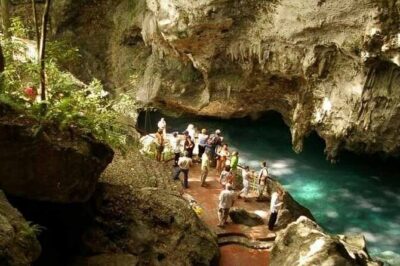 ★ 3.5Day Trip to Santo Domingo from Punta CanaFrom $55659 reviews
 ★ 3.8Santo Domingo Day Trip with Tickets and LunchFrom $82584 reviews
 ★ 4.1All Inclusive Santo Domingo Full-Day City TourFrom $70553 reviews
 ★ 4.8Los Tres Ojos, Boca Chica & MoreFrom $87219 reviews
 ★ 4.0Historical Santo Domingo Day Trip from Punta CanaFrom $95176 reviews
 ★ 4.5Walking Tour from Santo Domingo CityFrom $60167 reviews
 ★ 3.6Santo Domingo Colonial City TourFrom $85129 reviews